

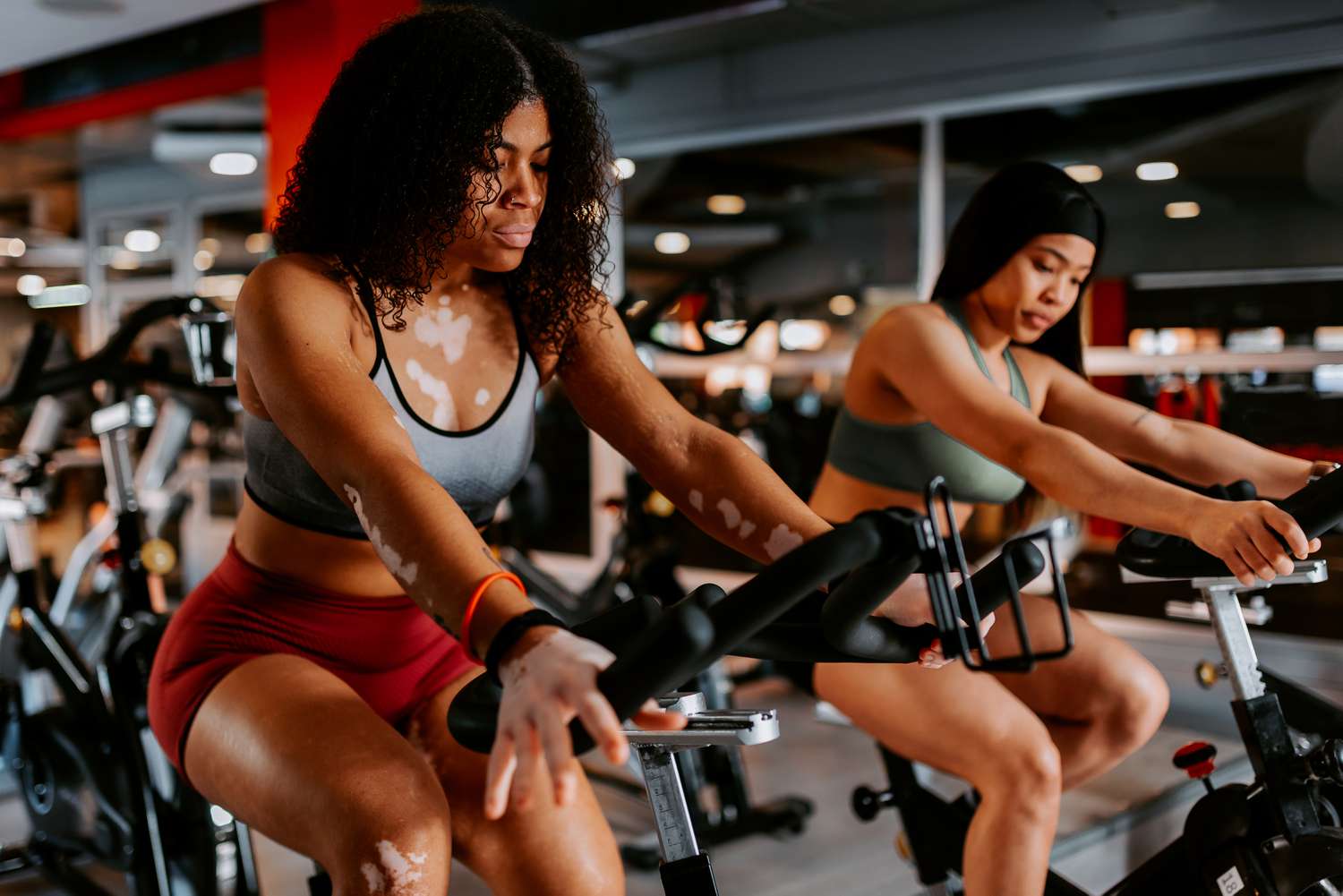
Cadence looks beautifully objective on a bike console. The screen reports revolutions per minute, the instructor announces a range, and everyone appears to have the same task. Yet equal cadence does not create equal work. Sixty-five revolutions per minute against meaningful resistance may be a controlled strength-endurance effort, while the same number against a light flywheel load is little more than slow spinning. At the other extreme, 110 rpm can be a useful neuromuscular drill for one rider and an unstable, hip-bouncing scramble for another.
That is why a well-designed indoor cycling Singapore session should treat cadence as one variable inside a system, not as a universal score. Resistance determines torque demand. Rider proportions affect joint paths and comfortable movement speed. The training goal determines whether the interval should reward force, aerobic economy, rapid leg turnover or repeated surges. Technique decides whether the selected number can be produced cleanly.
Cadence Describes Speed, Not Difficulty
Cadence tells you how frequently the crank completes a revolution. It does not reveal the force applied during each revolution. Mechanical power depends on both rotational speed and torque, so riders can reach an identical cadence at very different workloads. This is the first reason an isolated rpm target is incomplete.
Consider two riders holding 90 rpm. One has selected enough resistance to produce a sustainable aerobic effort. The other has reduced resistance until the pedals almost carry the legs around. The display shows the same cadence, but muscular recruitment, cardiovascular strain, stability and training value are not equivalent. Conversely, a rider can make 70 rpm unnecessarily severe by adding more resistance than posture and joint control can support.
The practical coaching question is therefore not, “Can you hit the number?” It is, “Can you hold the intended cadence against a load that produces the intended physiological and technical response?” Cadence becomes informative only when paired with resistance, perceived effort and movement quality.
Resistance Changes the Meaning of Every RPM Range
Lower Cadence Can Create a Torque-Oriented Interval
When cadence falls and resistance rises, each pedal stroke generally requires greater force. Used deliberately, this can develop local muscular endurance and the ability to sustain pressure through a climb-style effort. The rider should still be able to keep the pelvis quiet, avoid collapsing through the upper body and move through the bottom of the stroke without stamping.
The common error is interpreting “heavy” as “as heavy as possible”. If resistance forces the rider to rock from side to side, pull excessively on the handlebars or stall at the weakest part of the circle, the set has crossed from specific loading into compensation. The correct load is the highest one that preserves the session’s prescribed cadence and technique, not the highest setting the knob permits.
Higher Cadence Can Train Turnover, but Only With Control
Faster pedalling reduces the time available for each force application and can challenge coordination. It may suit rapid leg-speed drills, flat-road simulations or short accelerations. However, removing resistance to make a high cadence accessible can undermine both control and meaningful power production.
A useful high-cadence effort has enough flywheel connection for the rider to guide the pedal rather than chase it. Warning signs include bouncing on the saddle, repeated loss of foot pressure, shoulders oscillating with every stroke and an inability to reduce cadence smoothly. These signs matter more than whether the console reads 105 or 110 rpm.
Rider Size Influences What Feels Natural
Rider size should not be used as a crude rule that tall people must pedal slowly and small people quickly. The relationship is more nuanced. Limb length, segment proportions, joint range, crank dimensions and bike setup all influence the path travelled by the hip, knee and ankle during each revolution. Two people of equal height can therefore have different comfortable cadence ranges.
A rider with longer limbs covers a greater linear path at the foot for a given crank system, while a shorter rider may experience the same rpm as a different coordination problem. Mobility and neuromuscular familiarity further modify the result. Experienced cyclists often develop smoother control at cadences that feel rushed to occasional riders, but experience does not eliminate individual biomechanics.
This is consistent with laboratory work showing that cadence, workload and saddle height interact with lower-limb mechanics rather than operating independently. A study of joint work distribution in cycling examined these variables together, reinforcing why an instructor should observe the whole movement instead of prescribing rpm in isolation.
The Session Goal Should Lead the Prescription
Aerobic Endurance
For a sustained aerobic block, the winning cadence is usually one the rider can maintain with stable breathing, consistent resistance and minimal technique drift. The target should make the cardiovascular system work without creating unnecessary local muscular failure. If a rider’s quadriceps burn long before breathing reflects the intended zone, cadence may be too low for the chosen torque. If heart rate rises while the pedals feel disconnected, resistance may be too light and cadence unnecessarily high.
Strength-Endurance
A strength-endurance interval usually benefits from lower cadence and higher controlled resistance. The goal is repeated force production, not a contest to find the slowest possible crank speed. The rider should feel sustained muscular tension while maintaining an even stroke. The correct endpoint arrives when technique begins to deteriorate, cadence cannot remain inside the range, or effort exceeds the planned intensity.
Threshold and Power Intervals
Threshold work needs enough specificity to make the intended power or effort sustainable for the interval duration. Some riders produce a given output more economically at a moderately high cadence, while others prefer slightly more torque per stroke. Rather than forcing every rider into the same rpm, the instructor can provide a bounded range and use power, heart rate trend and perceived exertion to confirm that the interval is landing correctly.
Neuromuscular Speed and Sprints
Short accelerations reward rapid force development and coordination. Here cadence may climb quickly, but resistance must prevent uncontrolled flywheel speed. A sprint that starts too light often produces an impressive rpm number with little transferable force. A sprint that starts too heavy delays acceleration and encourages upper-body strain. The best setup lets cadence rise under pressure while the rider remains centred.
Technique Is the Gatekeeper
Cadence should be reduced whenever the rider cannot maintain three essentials: a stable pelvis, a controlled knee path and continuous contact with the pedal system. These are not aesthetic details. They show whether the rider is managing the selected rotational speed.
Instructors can use a simple sequence. First, observe the rider before changing anything. Second, ask for a small resistance adjustment rather than a dramatic one. Third, reassess breathing and posture after 20 to 30 seconds. Fourth, change cadence only if the original target still produces instability or misses the intended effort. This prevents the common mistake of changing several variables at once and losing the reason behind the correction.
Riders can apply a similar check: if the hips bounce, add modest resistance or reduce rpm; if the pedals stall, remove a small amount of resistance or raise cadence; if breathing and leg tension do not match the interval goal, adjust the variable that is causing the mismatch.
Build Personal Cadence Bands, Not One Favourite Number
An advanced rider benefits from recording useful cadence bands for different tasks. These are not rigid zones. They are working references that improve decision-making across classes.
- An endurance band should feel repeatable and technically quiet.
- A torque band should create muscular pressure without joint discomfort or grinding.
- A turnover band should feel quick but connected.
- A sprint band should be achievable only with purposeful acceleration and sufficient resistance.
Over several sessions, note cadence, perceived effort, resistance cue, interval duration and whether technique remained stable. The pattern is more valuable than a single peak rpm. It also helps distinguish fitness progress from console chasing. If the same cadence and comparable resistance produce lower perceived effort over time, that is useful adaptation. If cadence rises only because resistance falls, it is not the same achievement.
Coaching Makes Cadence Individual Without Making Class Chaotic
Group cycling needs shared structure, but shared structure does not require identical output. An instructor can announce a primary cadence range, explain the training intention and offer a controlled alternative. For example, a climb may be prescribed at 65 to 75 rpm, with riders invited to sit slightly higher within the range if heavier torque disrupts knee comfort or pelvic control.
The current spin formats at TFX Singapore include technique, resistance, cadence, zonal work, hills, sprints and power-oriented training. That variety makes a goal-led cadence strategy more useful than one permanent rpm preference. The rider learns to change gears conceptually: sometimes cadence supports endurance, sometimes it supports force, and sometimes it supports coordination.
The Better Target Is an Outcome
Cadence is valuable because it gives the room a common language. It becomes misleading when treated as proof of intensity or ability. A credible target must survive four tests: the resistance is appropriate, the rider can control the movement, the biomechanics are tolerable, and the number serves the interval’s purpose.
The strongest indoor cyclists are not those who always pedal fastest. They are the riders who can select and sustain the cadence that solves the task in front of them.
Frequently Asked Questions
Is a higher cadence always better for cardiovascular fitness?
No. Cardiovascular demand depends on total workload, interval structure and the rider’s response. High cadence with minimal resistance may create less useful work than a moderate cadence with controlled load. Use breathing, heart rate trend, power where available and perceived effort alongside rpm.
Why do my hips bounce at high cadence?
Bouncing often indicates that cadence exceeds current control, resistance is too light, saddle setup needs attention, or several factors are interacting. Reduce speed slightly, add a small amount of resistance and ask an instructor to check setup if the problem persists.
Should tall riders always use a lower cadence?
No. Height alone is an incomplete proxy for limb proportions and movement preferences. Tall riders can pedal quickly and shorter riders can prefer more torque. The appropriate range is the one that fits the session goal while preserving stable mechanics.
How can I tell whether a low-cadence climb is too heavy?
It is probably too heavy if you cannot keep cadence within the prescribed range, the pelvis rocks, the knees deviate noticeably, the upper body pulls hard on the bars, or joint discomfort develops. Reduce resistance before compensation becomes the dominant movement strategy.